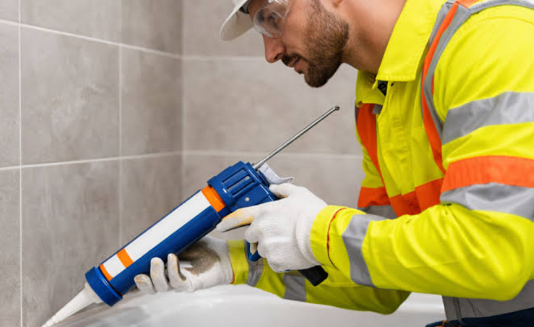
If along the edges of your floors there are small gaps, or your bathroom joints have started looking a bit rough, then for caulking services on the Gold Coast you are probably already searching. And honestly, it is one of those jobs people keep putting off until the damage has already been done. Between surfaces, sealing gaps with a flexible sealant is basically what caulking is, and while it sounds like a simple thing, getting it right makes a real difference to how well your home holds up over time. Professional-grade caulking products, used by tradespeople and homeowners right across the Gold Coast, are widely available for both DIY and professional applications.
Moisture Is the Real Problem Caulking Solves
Here is what most people do not think about until water damage has already shown up. Humid, the Gold Coast is. Summers are sticky, the rain is heavy, and into every unsealed gap it can find, that moisture works its way. Underneath a timber floor is honestly the last place you want water to be sitting. Once it gets in there, the timber swells, the adhesive starts to weaken, and before very long you are looking at a floor that needs full replacement. Along the perimeter and at the right joints, a bead of sealant applied correctly stops all of that before it ever starts. Against an expensive problem, it is cheap prevention.
The Spots in Your Home That Actually Need Sealing
As something that belongs in a bathroom, caulking is usually what people think of, and yes, the wet areas are absolutely a priority. But plenty of other spots get overlooked. The gap running around the entire edge of a timber floor, between the boards and the skirting board, is among the most important ones. That gap is deliberately there, so the timber can move as temperatures change, but to keep out dust, insects and moisture, it still needs to be sealed. Kitchen kickboards, transitions between different floor surfaces, and the base of cabinetry are other spots that see water regularly and from a proper seal they benefit quite a lot.
Silicone or Timber Caulk: They Are Not Interchangeable
Grab the wrong product and either a sealant that cracks within months is what you end up with, or one that looks completely out of place against your floor. Because they stay flexible and resist water over the long term, silicone sealants are made specifically for wet areas. Timber-matched caulks are a different product entirely. To blend into the colour of the floor they are designed, so the finished result looks clean rather than patched. Along the edge of a merbau floor, white silicone is going to look exactly as bad as it sounds. If you want a professional result, matching the product to the surface is simply not optional.
What the Gold Coast Climate Does to Unsealed Floors
Timber moves. In a climate like the Gold Coast, where between very high humidity in summer and much drier conditions in winter it swings, that is just what it does. Every time the humidity rises, the timber expands slightly. Every time it drops, it contracts again. Completely normal this is, and a good installation accounts for it. The problem comes when in joints that are meant to flex, rigid fillers get used. With the timber a rigid product cannot move, so it cracks and falls out. Then the gap is open again and looking worse than before. Because it moves with the floor, flexible caulk is the correct product for perimeter sealing in a Queensland home.
Why the Last Step of an Installation Is Often the Most Visible
Walk into a room with freshly laid timber floors and what your eye catches first is the edge of the room. That perimeter line, where the floor meets the wall, is what gives the whole installation its finished look. If the caulking is poorly applied, wrong coloured, or missing altogether, it stands out immediately. With the same care as the installation itself, good caulking services on the Gold Coast treat this final step. Neatly the sealant gets applied, tooled smooth, and colour matched to the floor so it reads as part of the surface rather than something added as an afterthought. That last detail is often what separates a job that looks ordinary from one that looks genuinely well done.
