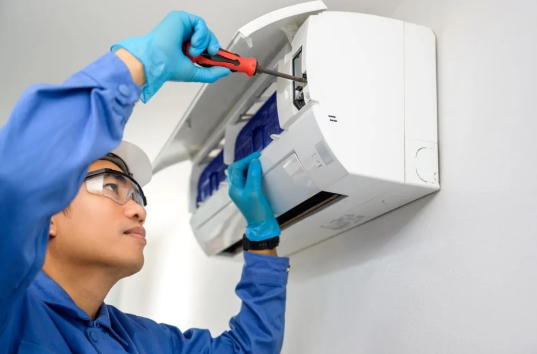
Domestic air conditioning installation is basically the full process of fitting a cooling and heating system inside a home property, so that it can run in a safe, efficient, and comfortable way throughout every season of the year. Whether the property is a small apartment or a bigger family house, having the right system and having it installed correctly from the very beginning — this makes a big difference, both to how the home feels day to day and to how much electricity gets used.
The Difference Between System Types
Not every home requires the same kind of air conditioning solution. For residential properties, the three most common options that people choose are ducted systems, split systems, and multi-head reverse cycle systems.
A ducted system is using concealed ducts that run through the ceiling or floor space, delivering conditioned air into multiple rooms at the same time. It is a solution for the whole home and blends into the architecture in a way that is not visible. Split systems are different — they have one indoor unit and one outdoor unit, and these two are connected by refrigerant lines. For single rooms or open-plan areas, split systems are a good fit, and generally the installation is faster and less complicated compared to ducted work. Multi-head systems are taking the split system idea one step further, because several indoor units are all connected to just one outdoor unit, giving each room its own independent temperature control, and all of this without needing large amounts of ductwork throughout the property.
What Actually Happens During Installation
Many homeowners are having questions about what a domestic air conditioning installation is actually involving on the day itself. For a split system, a licensed technician is mounting the indoor unit onto the wall, then positioning the outdoor unit somewhere suitable outside, drilling through the wall for the refrigerant lines and electrical cabling to pass through, and after that commissioning the whole system to confirm it is operating correctly. For a single unit, this kind of work is usually finishing within a few hours.
Ducted installations are more involved than that. The installer needs to plan out the full duct layout across the ceiling or subfloor space, install the central air handler, run all the duct connections out to each zone outlet, and then connect everything to the electrical supply and thermostat controls. Depending on how large the property is, this type of work is typically taking a full day or sometimes longer.
Why Home Layout Affects System Performance
One important reason why professional assessment matters so much is that the actual layout of a home has a direct effect on how well the air conditioning system will perform. A room that has high ceilings, or large windows on the western side, or not enough insulation in the ceiling — such a room will be losing or gaining heat much faster than a standard room. If the system capacity is not being matched properly to these real conditions, then it will either struggle to reach the temperature that was set, or it will be cycling on and off too frequently. Both of these situations are wasting energy and causing components to wear out more quickly than they should.
This is exactly the reason why a site visit and a proper load calculation are both considered part of responsible domestic air conditioning installation. Matching the system size correctly to the actual thermal load of the home — this is one of the most important steps in the whole process.
How Reverse Cycle Technology Changed Residential Comfort
Modern residential air conditioning systems are almost all using reverse cycle technology these days, which means the same unit is able to cool the home during summer and also heat it during winter. This is achieved by reversing the refrigeration cycle, so heat is being extracted from the outside air and brought into the home, even when outside temperatures are not very warm. For heating purposes, reverse cycle systems are significantly more energy efficient than older electric resistance heaters, which is making them a practical solution for Australian homes across the whole year.
The efficiency of these systems is rated in two ways — the coefficient of performance, which is for heating, and the energy efficiency ratio, which is for cooling. Systems with higher ratings are consuming less electricity to produce the same amount of thermal output, and this is reducing running costs over the full lifetime of the system.
What Certification and Compliance Mean for Homeowners
In Australia, any person who is handling refrigerants during an air conditioning installation must be holding an ARC licence, which stands for Australian Refrigeration Council. This is a legal requirement that exists under the Ozone Protection and Synthetic Greenhouse Gas Management Act. Beyond the refrigerant handling side of things, the electrical work that is involved in connecting an air conditioning system must also be carried out by a licensed electrician.
These compliance requirements are existing to protect homeowners, the general public, and the environment as well. When a properly certified installer is engaged for domestic air conditioning installation, the homeowner is also protecting the manufacturer’s warranty on the equipment, because most warranties are requiring professional installation as one of the conditions.
The Long-Term Value of Getting Installation Right
An air conditioning system that has been well installed, correctly sized, properly commissioned, and maintained on a regular basis — such a system is typically lasting between 10 and 15 years or even longer. Poor installation, on the other hand, is leading to problems like refrigerant leaks, compressor failures, uneven temperatures across rooms, and high electricity bills that come from a system that is always overworking itself.
Regular maintenance activities, such as cleaning the filters, checking the refrigerant charge level, and inspecting electrical connections — these are extending the life of the system and keeping it running at the efficiency level it was rated for. Most manufacturers and installers are recommending a professional service check at least one time per year.
