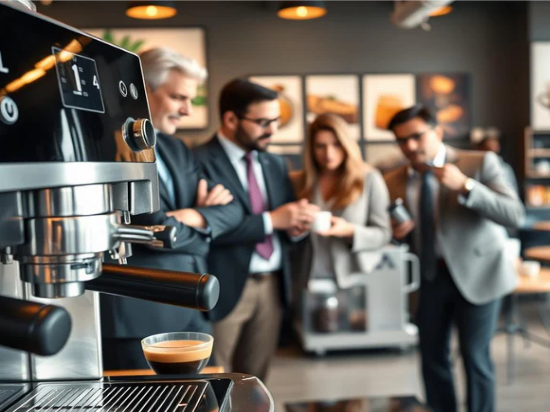
Sydney is one of the few cities where a customer will send back a flat white because the milk temperature was slightly off. That is not snobbery — that is what happens when a city spends decades building genuine café culture from the ground up. The side effect nobody planned for is that it has made Sydney’s home and office coffee buyers unusually hard to impress. Coffee machine sales in Sydney have shifted accordingly, and the machines people are now buying reflect a very different set of expectations than they did even a few years ago.
Single Boiler Machines Are Losing Ground
Entry-level espresso machines with a single boiler — where the same element heats water for brewing and steaming — require the user to wait between pulling a shot and texting milk. Most people discover this frustration after purchase, not before. Sydney buyers are increasingly bypassing this category entirely in favour of heat exchangers or dual boiler machines, which handle both simultaneously. Retailers who deal in volume report that this question comes up early in conversations now, which suggests buyers have done their research — or have already owned a single boiler machine and regretted it.
Water Quality Is Quietly Wrecking Machines
Sydney’s tap water sits on the harder end of the scale for a coastal city. Calcium deposits build up inside boilers and group heads faster than most owners expect, and many machine failures that get attributed to manufacturing defects are actually scale damage from skipping descaling cycles. Specialty retailers have started leading with this conversation rather than burying it in a manual. The buyers who come in asking about water filtration attachments upfront tend to own their machines for far longer — that is not marketing; that is just the pattern experienced technicians see repeatedly.
What the Office Market Is Actually Asking For
The workplace segment is where coffee machine sales in Sydney have seen some of the more interesting movements. Small creative studios and professional offices have largely abandoned the pod machine — not for environmental reasons, as is often assumed, but because the output quality became embarrassing once clients started expecting better. The replacement choice is rarely a traditional espresso machine, either. Bean-to-cup automatics that grind, tamp, and extract without manual intervention have become the practical middle ground for offices that want quality without assigning someone to manage it.
Why the Warranty Conversation Matters More Than It Looks
A machine that breaks down and sits on a bench waiting for parts is worse than not owning one at all — especially in a workplace. Sydney has a reasonable density of authorised service agents for the major European brands, but the wait times for parts on less common machines can stretch considerably. Buyers who ask about local service availability before committing to a brand often make very different choices than those who discover the situation afterwards. Retailers who surface this information unprompted tend to earn repeat customers; those who do not tend to earn complaints.
The Grind Setting Nobody Warns You About
One thing coffee machine retailers rarely emphasise clearly enough is that most home espresso machines ship with a pressurised portafilter basket — a design that forgives poor grind quality by forcing water through regardless of how the grounds are prepared. It produces coffee that tastes acceptable but masks what the machine is actually capable of. Swapping to a non-pressurised basket, which most machines support, immediately exposes the quality of the grind. Buyers who make this switch without upgrading their grinder are often disappointed; those who upgrade both at once are consistently not.
Conclusion
The gap between buying a coffee machine and buying the right coffee machine is wider in Sydney than most buyers anticipate. Coffee machine sales in Sydney reflect a market where people genuinely care about the result in the cup — but caring is not the same as knowing what to look for before spending. Water hardness, boiler configuration, service infrastructure, and basket type are not minor footnotes. They are the difference between a machine that becomes a daily pleasure and one that sits unused beside the kettle within six months of purchase.
